
Culture Programs and Business Outcomes: Why Good Intentions Don’t Survive Budget Cuts
By: Coleman Williams, Co-founder at Wrestling With Talent (WWT)
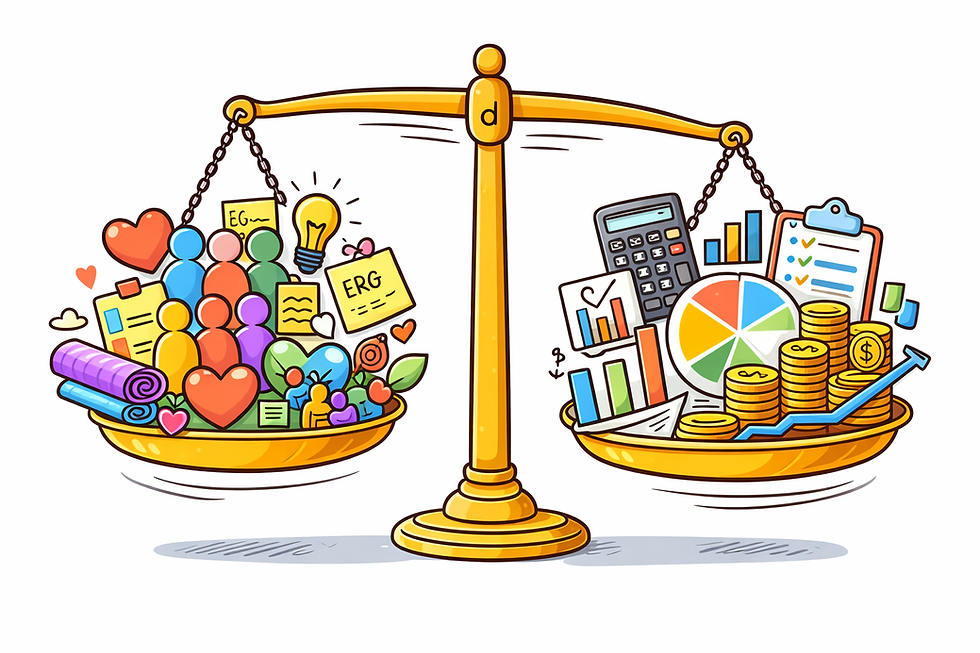
Culture work often lives in the background of organizations—quietly shaping how people show up, collaborate, and make decisions. But when budgets tighten, the programs that operate behind the scenes are often the first to be questioned.
This isn’t because leaders don’t care about culture. It’s because budget decisions are made quickly, pragmatically, and with a sharp focus on what clearly drives performance and results. Initiatives that don’t have a visible connection to those outcomes, no matter how well-intentioned, tend to struggle to survive. That’s not malice. It’s just math.
That tension is where much of today’s culture work gets exposed.
I’ve seen this play out more times than I can count.
Employee Resource Groups, tuition reimbursement, leadership development, and wellness initiatives are all designed to support people and strengthen organizations. Yet many of these programs are built without a clear narrative that explains how they contribute to productivity, retention, or growth. Participation exists. Impact is assumed. And the story stops there.
By the time organizations start asking which programs can be paused or reduced, it’s already too late to begin explaining their value. Passion, anecdotes, or a last-minute slide citing research rarely change the outcome once the budget conversation has begun.
The Business Reality Culture Can’t Ignore
At the end of the day, businesses exist to generate revenue. That reality doesn’t invalidate culture work—it defines the environment it must operate within.
When leaders are forced to make trade-offs, they protect what they can clearly connect to results. Programs that feel disconnected from performance or financial outcomes are seen as optional, regardless of how meaningful they may be to employees.
Good intentions don’t survive budget cuts in many organizations. Clear value does.
Culture programs become especially vulnerable when they operate quietly. Employees benefit, but they aren’t positioned to advocate for the program’s importance. Leaders support the idea, but lack concrete examples of what problem the program is solving. Without a clear strategy, culture work doesn’t just struggle—it becomes easy to remove.
Culture Programs and Business Outcomes: Designing Culture With the End in Mind
Effective culture programs don’t start with activities. They start with outcomes.
The question isn’t simply whether an initiative is good for employees. It’s what business challenge the program helps address. Does it reduce regretted attrition? Improve time-to-productivity? Strengthen leadership readiness? Reduce risk or improve decision-making quality?
Research from firms like Gartner or HBR can help establish credibility, but it isn’t enough. External data explains why something should work. Leaders still need to see how it works inside their organization. For example, a leadership program that feels ‘inspiring’ but doesn’t change promotion readiness is hard to defend.
That means designing programs intentionally and measuring what changes because the program exists—not just who participated.
Telling the Story Before You Have To

One of the most common mistakes culture leaders make is waiting until a program is under threat to explain its value. By then, the narrative gap is already too wide.
And, closing it in a budget meeting? Almost impossible.
Culture work needs to be communicated consistently, not defensively.
That includes connecting programs to outcomes leaders already care about: internal promotions, reduced turnover, engagement improvements, or fewer manager escalations.
Tuition reimbursement tied to critical skill gaps can shorten hiring timelines. ERGs can influence recruiting pipelines or product insight. Leadership programs can change manager behavior in measurable ways.
When those connections are clear, culture work stops feeling abstract and starts feeling essential.
🔥 WWT Hot Take
If you can’t explain the value of your culture program in business language, assume no one else can either—and act accordingly.
What to Do Monday Morning
This doesn’t require a big strategy reset. If you’re responsible for culture programs, start by taking an honest inventory. Identify one program and write down the business problem it is meant to solve. If that answer feels vague, that’s your signal to clarify or redesign.
Next, identify one metric that leadership already tracks and connect your program to it, even imperfectly. Progress matters more than precision.
Then, find two people—one leader and one participant—and ask them to articulate the impact in their own words. Their language is often more persuasive than a slide deck.
Finally, share the story early. Don’t wait for perfect data or a budget review. Visibility builds protection.
Culture Isn’t Optional—It’s Strategic
Culture work doesn’t fail because it lacks heart. It fails when it lacks clarity.
When culture programs and business outcomes are clearly connected, those initiatives stop feeling optional. They become part of how the organization operates, grows, and competes.
Budgets don’t eliminate culture. They reveal which programs were built to last.
About Wrestling With Talent:
Wrestling With Talent is not your average HR partner. We help growing companies build confident leaders, strong cultures, and people practices that actually work. Blending brain science, real-world experience, and a little fun, we design development experiences that are practical, engaging, and built for the way work really happens.
About CultureCon:
CultureCon, a Certified B Corporation®, is on a mission to inspire positive change around organizational culture. Through large conferences, online courses, consulting services, and certification programs, we deliver experiences that provide practical tools and motivation for our customers to become cultural change agents within their organizations. Our customers include business owners, CxOs, HR leaders, senior management, individual contributors, and anyone who wants to build more uplifting, inspiring, and healthy workplaces.
Learn more about our upcoming events.


