
CultureCon 2026 Recap: 5 Takeaways for Building Better Workplace Culture
Updated: Sep 17
Written by Co-founders Zach Blumenfeld and Nick Lombardino
CultureCon 2026 once again made history, this time as our largest gathering ever, with over 850 total tickets claimed. The event earned an average score of 9/10 from attendees and was honored with a Proclamation from Wisconsin Governor Tony Evers for its significant impact on the community and workplace culture nationwide. Hosted in Madison, Wisconsin, CultureCon 2026 brought together thought leaders, innovators, and change makers from nearly all 50 states and across 21 different countries to explore the future of work.
This year we did something different for our recap. We went back and combed through what attendees actually posted in the days after the conference. Hundreds of LinkedIn and Instagram posts later, five themes kept showing up. These are the takeaways the room decided mattered, in the words people used when they got home.
1. Culture Is Not Decorative. Culture Is Operational.

No line from CultureCon 2026 traveled further than this one from Claude Silver, Chief Heart Officer at VaynerX, in her opening keynote "Momentum with Purpose." Her framing showed up in attendee recap after attendee recap, quoted almost word for word:
"It's not what you say you value. It's what you tolerate. What you reward. What you ignore. Culture is always being built. The only question is whether you are building it on purpose."
Christina Zurek, an Engagement Strategist at ITA Group, was at her first CultureCon event this year. The standout of her week, she wrote, was that keynote and its focus on emotional regulation for leaders, which is about as operational as culture gets.
Arianne Dowdell and Anya Reed of Houston Methodist brought the receipts for what that looks like at scale. Their session, "Buy-In That Sticks," opened on the same idea: culture is built in daily interactions, and it sticks when leaders visibly champion it. As Vice President and Chief Culture & Engagement Officer, Arianne leads system-wide engagement across one of the country's largest hospital systems, and Anya directs the execution of it through the Office of Culture & Engagement. They walked through the machinery that keeps culture work from quietly becoming a side project: executive sponsorship people can see, town halls, OCE committees and councils, ERGs, scholar programs, and disciplined follow-through when the initial enthusiasm wears off.

Maggie Redling and Coleman Williams of Wrestling With Talent came at it from the opposite end of the org chart in "You Don't Need Permission to Shape Culture." Their argument: culture isn't controlled by reporting lines. It's shaped daily by what gets reinforced, what gets tolerated, what gets clarified, and what gets amplified. When people wait for permission to influence those things, culture stalls.
Key takeaway: Culture is built every day by what gets rewarded, tolerated, and ignored. Leaders make it stick by showing up in those moments consistently and in public, and everyone else shapes it whether they have the title or not.
2. Employee Voice Only Counts If Something Happens Next
Eric Glenn of Virginia Tech University Libraries and Sertrice Shipley of Plan to Action gave the most structurally useful session of the conference, "From Mistrust to Momentum." It was a real case study: deep mistrust inside the Libraries, addressed through a mixed methods employee experience survey, qualitative listening sessions, and facilitated community circles. What they surfaced became a layered strategy with early interventions, mid-range work like supervisor development, and long-term infrastructure including a shared governance redesign.

Izzie St. John, Philanthropy Coordinator at the American Cancer Society and one of this year's Culture Impact Award winners, tied their session to two others in her recap and landed the theme better than we could: "Employee voice only matters if we're willing to do something with what we hear. Listening is where culture begins. Action is what gives it credibility."
Her second thread came from Glenn Bostock, CEO of SnapCab, in his keynote "The Human Business." She wrote that SnapCab "rewards people for identifying problems, not just solving them," and that the shift creates a culture where people speak up without needing to arrive with all the answers. Her line about it: sometimes the person closest to the problem isn't the one who needs to solve it, but their perspective may be exactly what's needed.

Bryetta Calloway of Stories Seen pushed the same question further, asking the room to define and listen to its Culture Keepers, the people in Communications, Brand, Learning & Development, and Creative who move culture through an organization without owning it on paper. Elizabeth Sziler, Senior People and Culture Manager at MAGNA-TILES, summarized the questions Bryetta left her with: Who gets heard? How are decisions really made? Who isn't in the room? Those answers, she wrote, say more than a values statement ever could.
That question of whose stories get heard also ran through the work of Dr. Rod Berger, CultureCon's Storyteller in Residence. In his breakout, "The Trust(ed) Co-Author: Sourcing the Stories That Rebuild Trust Inside Your Organization," Rod explored how organizations can uncover and elevate the stories already living inside their walls as a way to rebuild trust. He carried that work throughout the conference, moderating "Built to Adapt: How Organizations Thrive Through Constant Change" and interviewing speakers and attendees
in our live podcast studio.

The studio, created with podcast production partner Evergreen Podcasts, Studio Sponsor Motivosity, and podcast producer PeopleForward Network, gave us a place to capture perspectives beyond the stage and let attendees and speakers tell the story of CultureCon in their own words.
The room's own data backed it up. Rema Lolas, Founder and CEO of Grozaic, ran a live audience poll during her session "The Next Evolution of Team Performance."
Communication problems came back as the challenge these HR and People professionals hear most in their organizations, named by 57% of the room and the highest response of any option.
Dr. Rod Berger, our Storyteller in Residence, ran the same play in "The Trust(ed) Co-Author," on sourcing the stories that rebuild trust inside an organization, and kept it going all three days in our on-site podcast studio, presented by Motivosity.
Key takeaway: Listening earns trust only when people can see what changed because they spoke. Collect the voice, then show the receipts.
3. Safety and Empathy Are What Make High Performance Possible
Sam Simmons of Grace Peak Consulting built her session around a question most leadership teams get wrong: do we choose compassion or results? Drawing on leadership roles at the LPGA, Spurs Sports & Entertainment, HubSpot, and Wayfair, her answer is that the best teams refuse the choice and demand both. Kyra Boveda, CEO and Founder of Conello, led her takeaways from the entire conference with it: "Empathy isn't the enemy of excellence. It's what enables it."

Jennifer Anderson of Resilience Coaching & Consulting gave that idea its neuroscience in "Psychological Safety: The Human Foundation for AI-Accelerated Change." Her premise is that AI-driven change is arriving faster than most teams can absorb it, and when trust is low and transparency is improvised, psychological safety drops and teams get stuck in what she calls the anxiety zone: burnt out, silent, unable to move. Rather than describe safety, she ran the room through experiential exercises so people could feel the shift into the learning zone with strangers they'd met that morning. She also gave attendees the signs of low safety to watch for at home, which are usually silence and disengagement rather than open conflict.
Put the two sessions together and the case is hard to argue with. High standards need people willing to ask the question, flag the problem, and take the risk. That only happens where it's safe to do it.
Key takeaway: Psychological safety is the precondition for high performance, not a trade against it. Safety is what makes hard standards reachable.
4. Protecting Your Capacity Is Part of the Job
Dr. Kyle Elliott ran "From Burnout to Boundaries: Protecting Your Peace as a Workplace Culture Leader" for the people who usually put themselves last. He asked participants to list every hat they wore in the past month, then circle the ones actually in their job description. Most hats stayed uncircled. Therapist, referee, firefighter, keeper of everyone's secrets.
Two of his lines followed attendees home. "'No thank you' is a beautifully full sentence." And, "Boundaries don't feel wrong because they're wrong. They feel wrong because you haven't practiced them."

Being good at the job is one thing. Holding pressure, ambiguity, conflict, and disappointment while still working well with other humans is a different resource, and it runs out.
The room was already feeling it. In that same poll from Rema Lolas's session, 45% said the challenge they hear most is that people are overwhelmed and burning out, second only to communication. Elizabeth Sziler put the systemic version of it plainly in her recap: we have to stop asking people to be resilient through things that are bigger than them or even their organization. Tonya Beeler, Senior Manager of Culture, Marketing & Strategic Initiatives at Quadel, wrote that she walked into Madison with a full plate and a car accident's worth of insurance calls, got asked "Why is it important that you're here, right now?", and left with her biggest takeaway being to protect time for the work that makes all the other work better.
Boundaries protect the capacity you have. Two sessions dealt with the other lever, which is creating more of it. Emily Mabie, Senior AI Automation Engineer for HR and People at Zapier, ran "Making Time for the Human: Lightening the Load with AI" as a practical framework for people managers being asked to deliver more with less. Her session walked through auditing your time with AI agents, forecasting capacity with smarter scheduling systems, and delegating adaptively, all pointed at one outcome: hand the logistics to automation so the hours you get back go to your people.
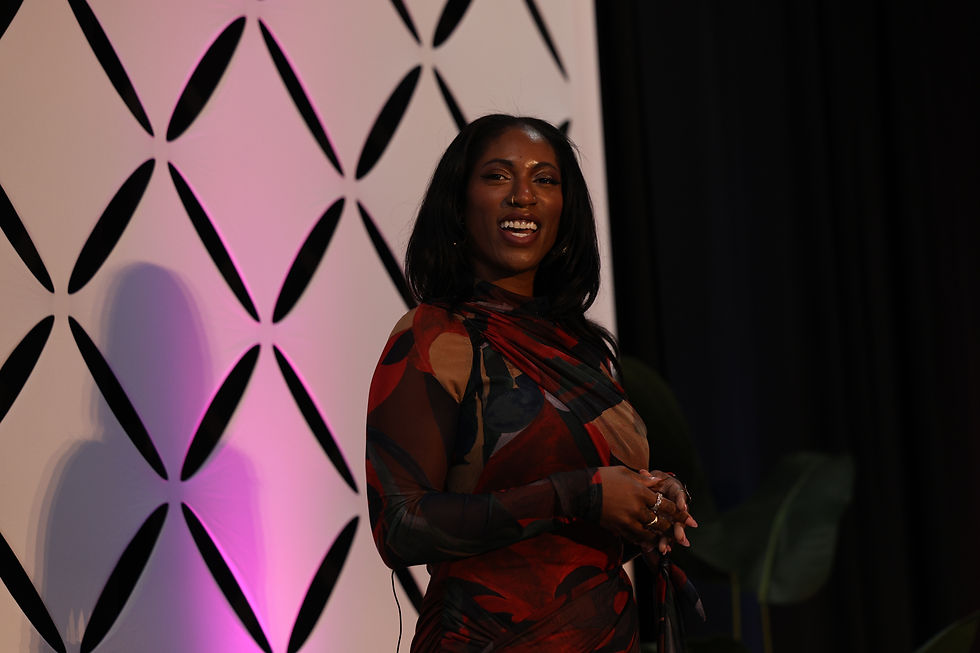
Latesha Byrd of Perfeqta cut through the noise around AI in People Operations with five practical ways teams are already using it to widen their impact and open up room for higher-value, human-centered work. Izzie St. John, who has followed Latesha's work since CultureCon West, summarized the throughline: AI should amplify our humanity rather than replace it, and the goal is to create more space for the human voice rather than remove it.
Key takeaway: Capacity is a resource you manage, not a character trait you have. Boundaries protect the capacity you've got, and used well, AI creates more of it. Both only pay off if the time you win back goes to people.
5. Belonging Gets Built in the Moments Between the Sessions
The moment attendees could not stop posting about wasn't on a slide. During Claude Silver's keynote, she put song lyrics on screen to make a point about every organization having an emotional soundtrack, and one brave attendee stood up and belted "Mr. Brightside" in front of the entire room.
That became the emotional signature of CultureCon 2026, and it proved her point better than a framework could. People build belonging when they feel safe enough to be a little ridiculous together. It's the same reason the Covve Connection Crew, the Mystery Trip, and the food carts on the Capitol Square filled so many attendee photos. It's why Justin Landis, Senior Manager of Grassroots Engagement at the United States Tennis Association, had people playing Red Ball Tennis in a conference room, and why Geoff Woliner, CEO of Perfectia Productions, gave more than fifty irreverent tarot readings over three days and came away writing that laughter and ugly crying are beautiful companions.
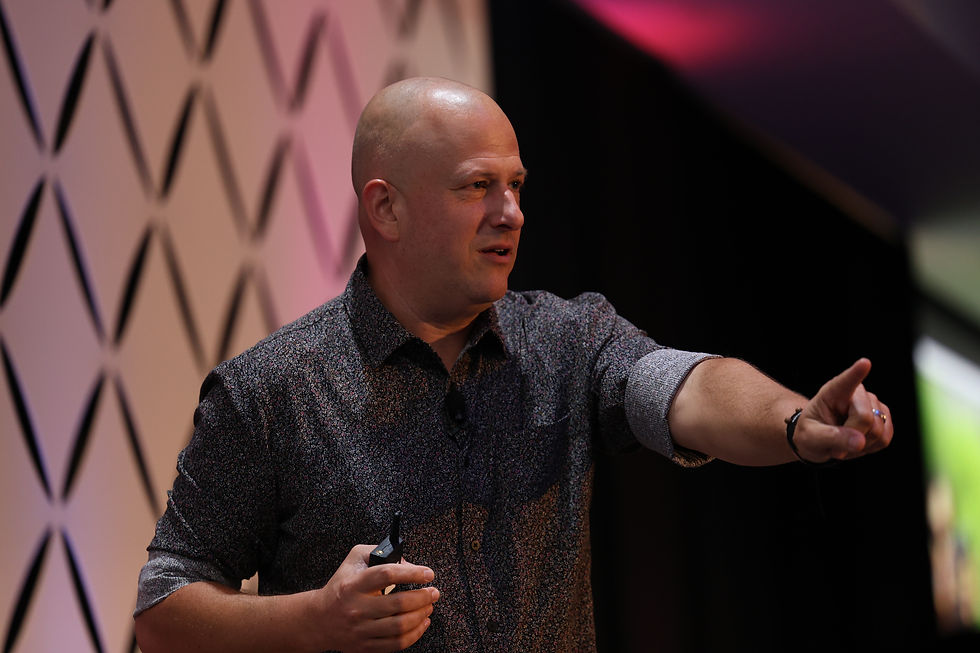
There's a serious version of the same instinct. Caleb Campbell, Chief People Officer at Kinetik, used his session "SOMETHING BIGGER: Culture and Impact Through Giving Back" to make the case for corporate volunteering and social impact as culture infrastructure. Drawing on recent research and real examples, he showed how organizations that build giving back into how they operate see measurable gains in attraction, engagement, and retention, while doing something useful outside their own walls.
Glenn Bostock landed the bridge between the two: the best culture add isn't always the most polished or highest-performing person in the room, it's the person with passion, shared purpose, and a real desire to build trust, relationships, and something bigger than themselves. Or, as Jennifer Anderson wrote a few days later: "It's all about the people. Always has been and always will be."
Key takeaway: Belonging comes from the unpolished moments and from shared purpose beyond the job description. Design for both.
Connection Doesn't Happen by Accident
As CultureCon's Official Connection Partner, Covve helped us make connection part of the infrastructure of the conference. Using Covve's badge scan technology, attendees could connect with someone new simply by scanning each other's badges. More than 2,200 connections were logged over the course of the conference, and every scan also contributed to something bigger: together, those connections helped us raise more than $5,000 for four nonprofit organizations!
Technology made connecting easy. Covve's Connection Crew helped make it meaningful.
Throughout the conference, the Crew created experiences designed to help attendees have fun, skip the small talk, and get to know one another on a deeper level. That included a Longer Table dining experience, a Joyful Connection Masterclass, and the Third Place Challenge, which encouraged attendees to leave the conference venue together and explore some of Madison's Third Places.
That same spirit extended beyond Madison. Connection Crew member Ryan G, Founder of Excitement Sessions, served as our virtual live stream emcee, helping online attendees meet and network with one another, connect with speakers through live Q&A, and feel like they were part of the experience even from hundreds or thousands of miles away.
Connection Crew members included: Stephen Jaye (Reclaim Your Time), Becky Brunner (Choose Happy Assisting), Asha Sarode (Uniquity Consulting), Vanya Boardman (PlayInnové), Kashonda Geiger, PHR (BFT Consulting, LLC), Ryan Goff (Excitement Sessions), Stephen Morris (SparkAnew, LLC), Stephen Coté (Apprenticeship), and Bradley Steckart (Sit By Me, Inc.).
Thank You CultureCon Sponsors!

The Full CultureCon 2026 Speaker Lineup
Five takeaways can't hold three days. Every speaker who took a CultureCon 2026 stage, and the full session details for each, lives on our CultureCon 2026 speakers page.
Claude Silver, Chief Heart Officer, VaynerX
Glenn Bostock, CEO, SnapCab | A Human Business
Caleb Campbell, Chief People Officer, Kinetik
Arianne Dowdell, Vice President, Chief Culture & Engagement Officer, Houston Methodist
Anya Reed, Director, Office of Culture & Engagement, Houston Methodist
Eric Glenn, CDP, Director of Organizational Development, University Libraries at Virginia Tech
Sertrice Shipley, Founder & CEO, Plan to Action
Dr. Kyle Elliott, Tech Career & Executive Coach, CaffeinatedKyle.com
Jennifer Anderson, Founder & CEO, Resilience Coaching & Consulting
Sam Simmons, Founder, Grace Peak Consulting
Emily Mabie, Sr. AI Automation Engineer for HR/People, Zapier
Latesha Byrd, CEO, Perfeqta
Rema Lolas, Founder & CEO, Grozaic
Maggie Redling, Co-founder & CXO, Wrestling With Talent
Coleman Williams, Co-founder & CEO, Wrestling With Talent
Bryetta Calloway, Founder & CEO, Stories Seen
Hattie Roche, Founder & Strategy Chief, Fauna
Michelle Spehr, Facilitator & Culture Consultant, MichelleSpehr.com
Dr. Rod Berger, Storyteller In Residence, CultureCon
Rachel Breitbach, Senior Advisor & Practice Lead, FarWell
Leah Roe, Founder & Leadership Coach, The Perk
Stephen Jolley, Director of Demand Generation, Motivosity
Jen Lipsey, Chief Growth Officer, Sunny Workplace
Katie McCormick, Director of Product, Bonusly
Rob Gorden, Manager, Social Play, United States Tennis Association
Tray Ross, VP of Growth, Corporate Traditions
CultureCon 2026 closed with final remarks from co-founders Nick Lombardino and Zach Blumenfeld, and the biggest announcement in CultureCon history, shared with the full community on August 18th.

The conversation continues this fall at CultureCon West 2026, October 27th - 29th in Las Vegas, and next spring at AI Summit 2027, May 18th - 20th in Madison.
Visit our Upcoming Events page to join us.
Frequently Asked Questions
What is CultureCon?
As a Certified B Corporation®, CultureCon is on a mission to inspire positive change around organizational culture. Through large conferences, online courses, consulting services, and certification programs, we deliver experiences that provide practical tools and motivation for our customers to become cultural change agents within their organizations. Our customers include business owners, CxOs, HR leaders, senior management, individual contributors, and anyone who wants to build more uplifting, inspiring and productive workplaces.
What were the biggest themes at CultureCon 2026?
Culture as daily operations rather than decoration, turning employee voice into visible action, psychological safety as the foundation for high performance, protecting and creating capacity for culture leaders including with AI, and building belonging through real moments of connection and shared purpose.
When are the next events?
CultureCon West 2026 runs October 27th - 29th in Las Vegas, and AI Summit 2027 runs May 18th - 20th in Madison, Wisconsin. Tickets are available at cultureconusa.org/tickets.


